If you train regularly, you will know the feeling. The morning after leg day, the stairs suddenly look a lot steeper. Your shoulders feel tight after a heavy push session, or your lower back starts to grumble after deadlifts. I often hike in the hills and mountains, so I am very familiar with the strains of exercising. After a long climb and a steep descent, I feel it in my legs, hips and back for days, and I understand how frustrating it is when tight, sore muscles hold you back.
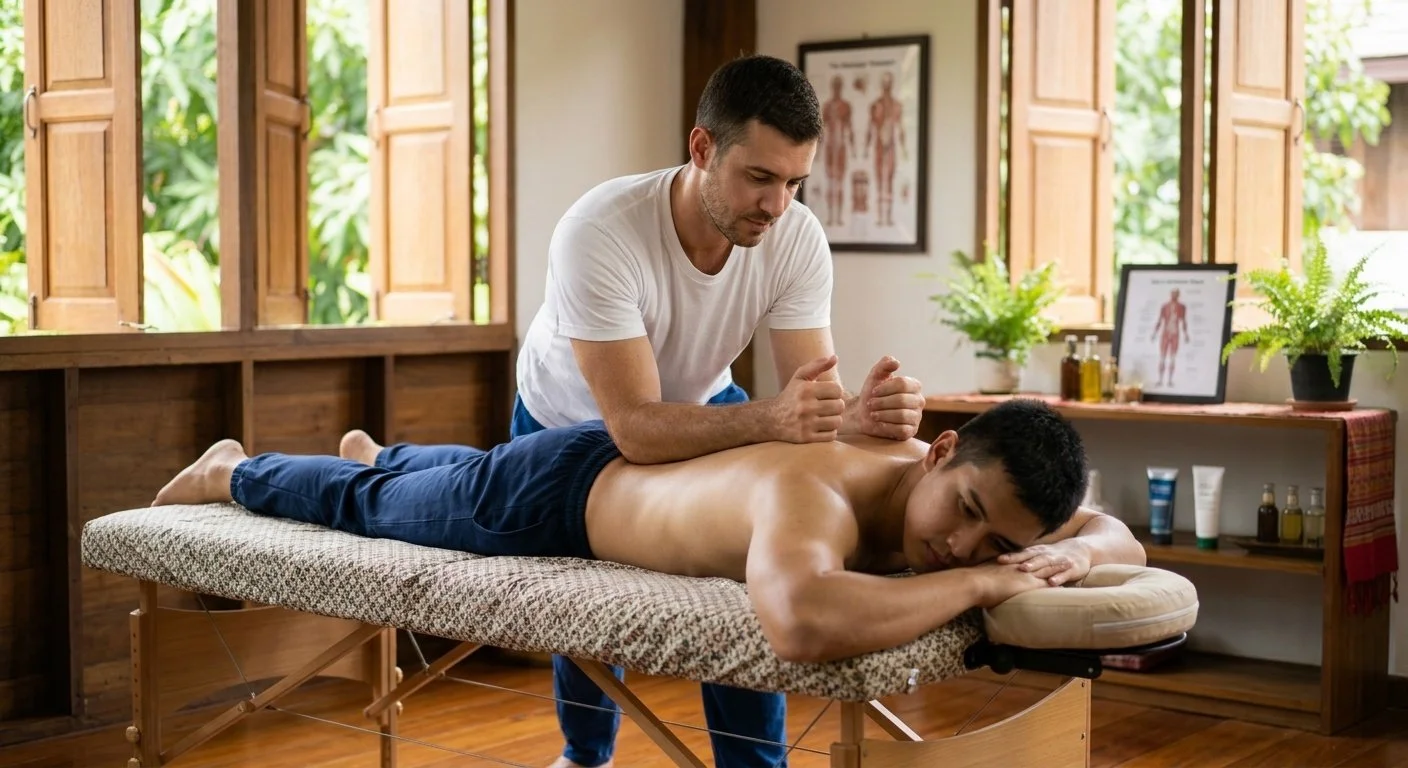
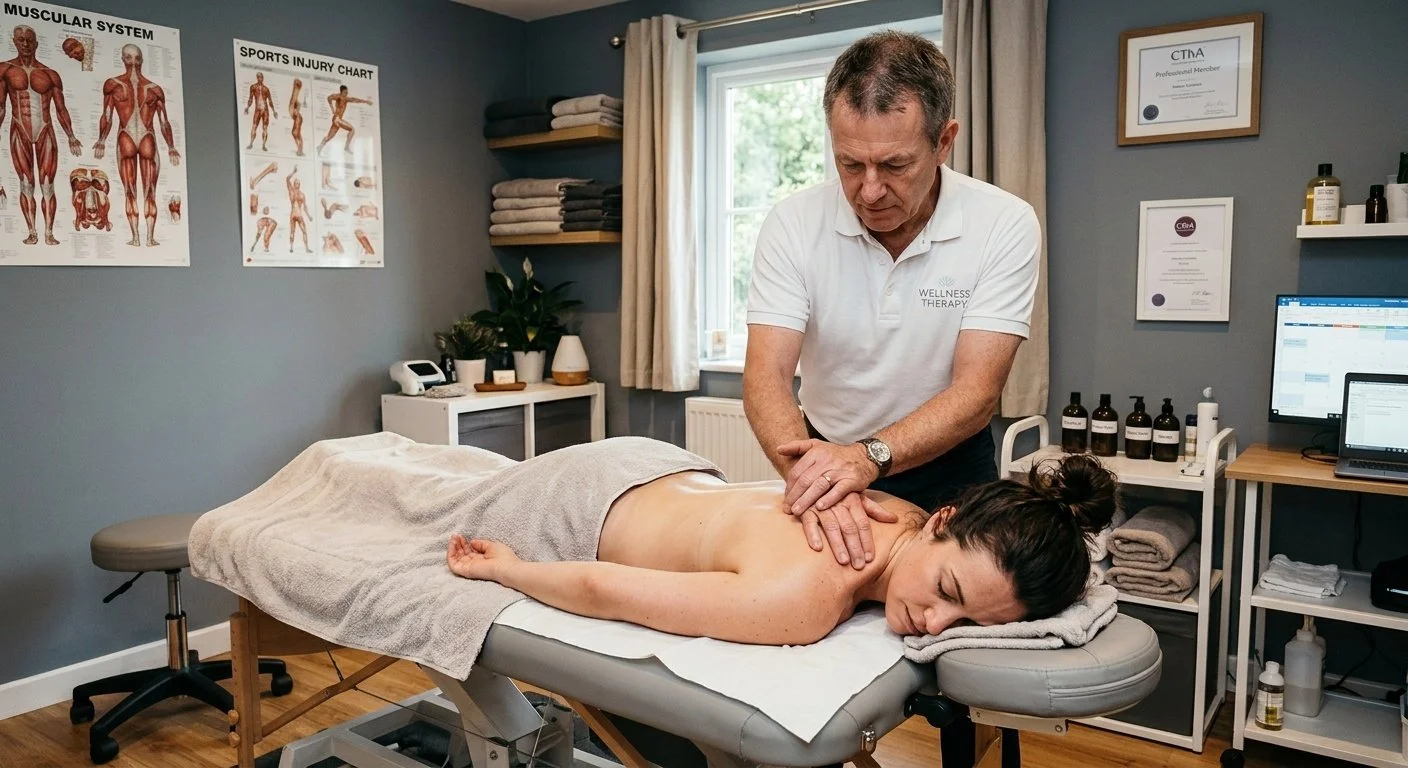
Massage is one of the best ways I know to look after your body between sessions. In this post I explain how massage can help gym goers, which type of massage might suit you, and what to expect when you come to see me.
Why Do Gym Goers Get So Tight and Sore?
When we lift weights or train hard, we create tiny amounts of stress in the muscle fibres. This is a normal part of getting stronger. As the muscles adapt, we often feel stiffness and aching a day or two later. This is known as Delayed Onset Muscle Soreness, or DOMS.
Over weeks and months, repeated training can also leave certain areas feeling tight and restricted. The ones I see most often in gym goers are:
Neck, shoulders and upper back, especially after pressing and pulling
Lower back, from squats, deadlifts and long hours sat at a desk
Hips and glutes, which can feel locked up and limit your squat depth
Hamstrings, quads and calves, from leg sessions, running and HIIT classes
If this tightness is not looked after, it can affect how well you move, how well you recover and how much you enjoy your training.
How Can Massage Help?
Massage works on the muscles and soft tissues to release tension and encourage the body to relax. Many of my clients who train tell me that regular massage helps them to:
Feel less stiff and sore after hard sessions
Move more freely, with better range of motion in the hips and shoulders
Ease the tight, knotted areas that build up over time
Sleep better and switch off from a busy week
Notice small niggles early, before they turn into something bigger
Massage is not only for professional athletes. Whether you lift a few times a week, go to classes or are training for an event, your body will thank you for a little care and attention.
What Does the Research Say?
There is good scientific evidence that massage helps the body recover after hard exercise, particularly by easing soreness and improving flexibility.
Massage came out on top for soreness and fatigue. A large 2018 review compared the most popular recovery methods, including massage, stretching, compression garments, cold water immersion and cryotherapy, across 99 studies. The researchers concluded that massage seems to be the most effective method for reducing muscle soreness (DOMS) and the feeling of fatigue after exercise.[1]
Less soreness for up to three days. A 2017 review of 11 trials, involving 504 people, found that massage after strenuous exercise significantly reduced muscle soreness at 24, 48 and 72 hours. It also reduced a blood marker of muscle damage called creatine kinase.[2]
Helpful after weight training. One study looked at the type of exercise that causes the most soreness in the gym: the lowering phase of a lift, such as slowly lowering a bicep curl. Just 10 minutes of massage, given three hours after the workout, reduced soreness by about 30% and reduced swelling in the muscle.[3]
Calming inflammation in the muscle. Researchers at McMaster University took small samples from the thigh muscles of people after exhausting exercise. Ten minutes of massage reduced the signals of inflammation in the massaged leg compared with the leg that was not massaged.[4]
Better flexibility, and a great partner for stretching. A 2020 review from the University of Sheffield, covering 29 studies and 1,012 people, found that massage gave small but real improvements in flexibility and muscle soreness.[5] Stretching on its own did little for soreness in the 2018 review,[1] so pairing your usual stretching routine with massage gives you the best of both. Thai massage, with its assisted stretches, is especially good for this.
I like to be honest with my clients. The same research shows that massage will not directly make you stronger or faster, and it is not a substitute for good sleep, food and sensible training.[5] What it can do is help you feel less sore, move more freely and get back to training comfortably.
Which Type of Massage Is Right for You?
I practise Sports massage, Chinese massage (Tui Na) and Thai massage at the therapy rooms in Hale and Chorlton. Each one has its own strengths, and I often blend them to suit the person on the couch.
Sports Massage is the most popular choice for gym goers. It uses firm, focused techniques to work into tight muscles and release tension in the areas that take the most load during training.
Chinese Massage (Tui Na) comes from Chinese Medicine. In Tui Na we stimulate acupressure points and channels with our hands rather than with needles. It is a great choice if you want to work on muscle tension and also feel more balanced and energised.
Thai Massage (Nuad Bo-Rarn) combines acupressure with assisted stretches and gentle rocking. It is ideal if you feel stiff and want to improve your flexibility, especially through the hips, hamstrings and back.
Cupping can be added to any of these treatments. Cups are placed on the skin to create a gentle suction that lifts and loosens the tissues. A combination of massage and cupping is particularly effective for tight backs and shoulders. If you are dealing with ongoing pain, I may also suggest acupuncture alongside your massage.
What to Expect in a Session
We start with a short chat about your training, any areas that are bothering you and any injuries or health conditions I should know about. This helps me to tailor the treatment to you.
The massage itself can be as firm or as gentle as you like. Sports massage can feel strong in tight areas, but it should never be unbearable. Just let me know and I will adjust the pressure.
After your session, it is a good idea to drink plenty of water and take it easy for the rest of the day. Some people feel a little tender for a day or so, much like after a good workout. Others feel loose and light straight away.
When Should You Book Around Your Training?
Timing can make a difference to how you feel.
After a hard session or a heavy training block: a massage in the following day or two can help ease soreness and stiffness.
Before an event or competition: book a lighter session a few days beforehand, rather than a deep massage the day before.
For general maintenance: many gym goers find that a regular massage every few weeks keeps them feeling at their best.
If you can, try to avoid a heavy leg or back session straight after a deep massage. Give your body a chance to settle first.
Signs It Is Time to Book
You feel stiff and sore for days after every session
Your squat, deadlift or overhead press feels restricted
You have a tight spot that just will not shift with stretching or foam rolling
You feel run down and are struggling to recover
You simply want to give your body some well-earned care
If you have a sudden, sharp pain, swelling or an injury that is getting worse, please see your GP or a physiotherapist first.
Answers to Some Frequently Asked Questions
Do I need to be an athlete to have a sports massage? Not at all. Sports massage is for anyone who is active, from beginners in the gym to experienced lifters.
Will it hurt? It can feel firm in tight areas, but you are always in control of the pressure. Massage should feel like a good kind of discomfort, never pain you have to grit your teeth through.
Can I train after a massage? Light movement such as walking is fine. I recommend leaving heavy training until the next day.
How often should I come? This depends on how often and how hard you train. Some people come every couple of weeks, others once a month or after a big training block. We can work out what suits you.
What should I wear? For Sports and Chinese massage, you will be covered with towels throughout. For Thai massage, please wear loose, comfortable clothing such as gym wear.
Book a Massage Session
Whether you want to recover faster, move more freely or simply give your body a well-earned reset, I would love to help you get the most out of your training.
Book an online discovery call here or call me on 07935 692 632 to arrange an appointment.
Precious Health, First Floor, Progress House, 17 Cecil Road, Hale, Cheshire, WA15 9NZ
References
Dupuy, O., Douzi, W., Theurot, D., Bosquet, L. and Dugué, B. (2018) An Evidence-Based Approach for Choosing Post-exercise Recovery Techniques to Reduce Markers of Muscle Damage, Soreness, Fatigue, and Inflammation: A Systematic Review With Meta-Analysis. Frontiers in Physiology, 9:403. doi:10.3389/fphys.2018.00403
Guo, J., Li, L., Gong, Y., Zhu, R., Xu, J., Zou, J. and Chen, X. (2017) Massage Alleviates Delayed Onset Muscle Soreness after Strenuous Exercise: A Systematic Review and Meta-Analysis. Frontiers in Physiology, 8:747. doi:10.3389/fphys.2017.00747
Zainuddin, Z., Newton, M., Sacco, P. and Nosaka, K. (2005) Effects of Massage on Delayed-Onset Muscle Soreness, Swelling, and Recovery of Muscle Function. Journal of Athletic Training, 40(3), 174–180. PMC1250256
Crane, J.D., Ogborn, D.I., Cupido, C., Melov, S., Hubbard, A., Bourgeois, J.M. and Tarnopolsky, M.A. (2012) Massage Therapy Attenuates Inflammatory Signaling After Exercise-Induced Muscle Damage. Science Translational Medicine, 4(119), 119ra13. doi:10.1126/scitranslmed.3002882
Davis, H.L., Alabed, S. and Chico, T.J.A. (2020) Effect of sports massage on performance and recovery: a systematic review and meta-analysis. BMJ Open Sport & Exercise Medicine, 6(1), e000614. doi:10.1136/bmjsem-2019-000614